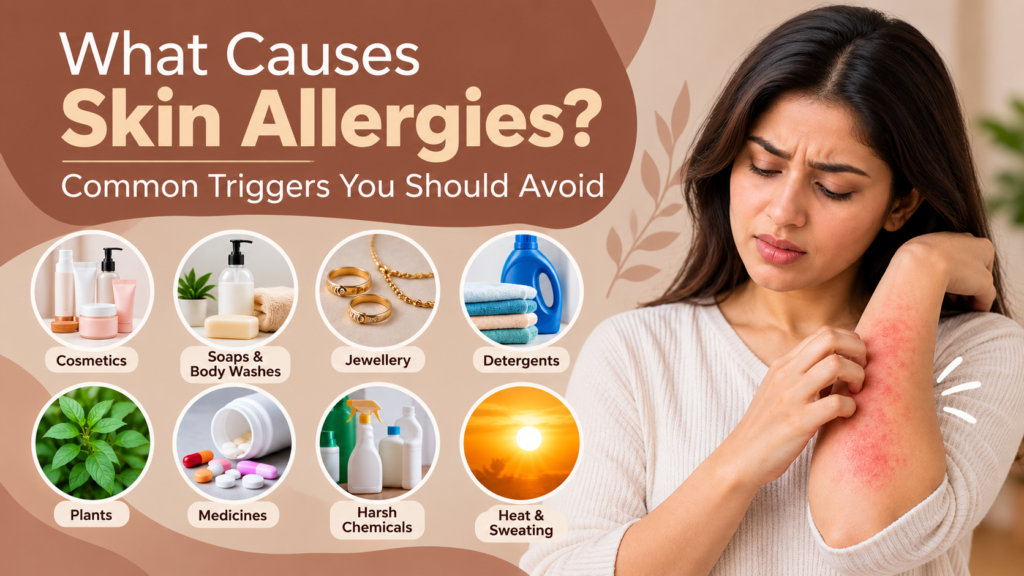
Why does my skin suddenly become red, itchy, or irritated?
This is a common question people ask when they notice a new rash or sudden skin irritation. Sometimes the reason is easy to identify, such as a new cosmetic, jewellery, detergent, or medicine. In other cases, the cause is not obvious. It is also important to remember that not every itchy or red rash is a skin allergy. Similar symptoms can occur with skin irritation, eczema, infections, hives, and other inflammatory skin conditions. Finding the correct cause is therefore an important part of choosing the right treatment. If you have recurring rashes, persistent itching, or reactions that are difficult to explain, a dermatologist can examine your skin and discuss possible triggers. Skin Allergy Treatment in Indore depends on the type of reaction, its severity, and what is causing it. Let us look at the common causes of skin allergies, the triggers you should watch for, and when professional evaluation may be needed.
What Is a Skin Allergy?
A skin allergy happens when the immune system reacts to a substance that is normally harmless to most people. This substance is called an allergen. When the skin comes into contact with an allergen, or sometimes when the body is exposed to a particular substance, an immune response can occur. The result may be redness, itching, swelling, bumps, or other skin changes.
Common symptoms can include:
- Itching
- Redness
- Rash
- Swelling
- Burning or stinging
- Small bumps
- Dry or cracked skin
- Blisters
- Hives in some allergic reactions
The appearance of an allergic reaction can vary from person to person. This is why it is not always possible to identify the cause simply by looking at the rash. A dermatologist may need to consider your symptoms, medical history, recent exposures, skincare products, medicines, and the location and appearance of the rash.
Why Do Some People Develop Skin Allergies?
People can react very differently to the same substance. One person may use a particular cream for years without any problem, while another person may develop redness or itching after using it. Several factors may influence how the skin responds.
Individual Immune Response
The immune system does not react identically in everyone. Some people may become sensitised to certain substances and develop a reaction after exposure.
Genetics
Your individual tendency to develop certain allergic or inflammatory conditions can sometimes be influenced by genetics.
Sensitive Skin
People with easily irritated skin may have more problems with certain products or environmental factors. However, having sensitive skin does not automatically mean that you have an allergy.
Previous Exposure
Repeated exposure to a particular substance can sometimes lead to sensitisation. A reaction may therefore occur even if you have used the same product before without an obvious problem.
Existing Skin Conditions
People with conditions such as eczema may have a skin barrier that is more easily disturbed. This can make the skin more vulnerable to irritation.
Environmental Exposure
Heat, pollution, chemicals, dust, plants, and workplace substances can all affect the skin. Some may cause irritation, while others can trigger an allergic response.
What Are the Most Common Causes of Skin Allergies?
Many everyday products contain ingredients that can cause irritation or allergic reactions in some people. Here are some common triggers.
Can Soaps and Body Washes Cause Skin Allergies?
Yes, certain ingredients in soaps, body washes, and cleansers can cause skin reactions in some people. Fragrances and preservatives are among the ingredients that may cause problems. Strong cleansing products may also remove natural oils from the skin and cause irritation. It is important to understand the difference between an allergy and irritation. A product can irritate the skin without causing a true allergic reaction. If you repeatedly notice itching or redness after using a particular cleanser, stop using it and discuss the reaction with a dermatologist if it continues.
Can Cosmetics Cause an Allergic Skin Reaction?
Cosmetics are another possible trigger.
Reactions can sometimes occur after using:
- Makeup
- Foundation
- Face creams
- Sunscreens
- Fragrances
- Hair dyes
- Nail products
- Other beauty products
A reaction may appear exactly where the product was applied, although nearby skin can sometimes also become affected. If a new product causes repeated redness, burning, itching, or swelling, avoid continuing to apply it just to see whether the reaction gets worse.
Can Jewellery Cause Skin Allergy?
Yes. Certain metals, particularly nickel, can cause allergic contact dermatitis in some people.
You may notice itching, redness, dryness, or small bumps underneath:
- Rings
- Watches
- Earrings
- Necklaces
- Bracelets
- Belt buckles or other metal accessories
The reaction may repeatedly appear in exactly the same location where the metal touches the skin. If you notice this pattern, avoiding the suspected metal may help prevent further reactions. A dermatologist can help determine whether the reaction is likely to be an allergy or simple irritation.
Can Detergents Cause Skin Allergies?
Laundry detergents, fabric softeners, fragrances, and other laundry products can sometimes cause skin irritation or allergic reactions. If itching repeatedly develops after wearing freshly washed clothes, bedding, or towels, consider whether a laundry product could be contributing to the problem. Some people may prefer simpler, fragrance-free laundry products when they notice repeated reactions. However, persistent symptoms should still be evaluated rather than automatically blaming the detergent.
Can Plants Cause Skin Allergies?
Yes, contact with certain plants or plant substances can trigger skin reactions. The reaction may occur after touching a plant directly or coming into contact with substances released from it. It is also worth remembering that natural does not always mean safe for everyone. Plant-based ingredients in skincare products can also cause irritation or allergy in susceptible individuals. If you develop a rash after gardening, walking through vegetation, or handling a particular plant, make a note of the exposure.
Can Medicines Cause Skin Allergies?
Some medicines can cause skin reactions. These reactions can range from mild rashes to serious allergic responses. If you develop a new rash after starting a medicine, contact a healthcare professional for advice. Do not stop a prescribed medicine on your own unless a healthcare professional advises you to do so.If the reaction includes difficulty breathing, swelling of the lips or throat, severe dizziness, or other signs of a serious allergic reaction, seek urgent medical attention.
What Are the Symptoms of a Skin Allergy?
Symptoms can vary depending on the cause and severity of the reaction.
Common symptoms include:
- Itching
- Red patches
- Rash
- Swelling
- Burning
- Stinging
- Small bumps
- Dry or cracked skin
- Blisters
- Hives
Some reactions may appear shortly after exposure, while others can take longer to become noticeable. The location of the rash can also provide useful information. For example, a reaction that repeatedly appears underneath a watch or jewellery may point toward a contact-related trigger. However, symptoms alone cannot always confirm that you have an allergy.
How Can You Tell If a Rash Is a Skin Allergy?
Not every itchy rash is an allergy. A dermatologist may consider several factors before determining what could be causing your symptoms.
These may include:
- Where the rash appears
- When it started
- Whether it comes and goes
- Recent skincare or cosmetic products
- New medicines
- Exposure to chemicals
- Workplace exposure
- Contact with jewellery or metals
- Environmental exposure
- Previous episodes
- How the rash looks and feels
For example, redness after using a strong cleanser may be irritation rather than an allergy. Similarly, an itchy rash could be related to eczema, infection, hives, or another skin condition. This is why treating the correct cause is more important than simply treating the visible redness or itching.
Which Skin Allergy Triggers Should You Avoid?
If you frequently develop skin reactions, identifying and avoiding your personal triggers can be helpful.
Fragrances
Perfumes, scented soaps, creams, detergents, and cosmetics can cause reactions in some people. If you repeatedly react to fragranced products, consider simpler, fragrance-free alternatives.
Harsh Chemicals
Cleaning products, solvents, disinfectants, and other strong chemicals may irritate the skin. Use appropriate protection when handling chemicals and avoid direct skin contact whenever possible.
Certain Metals
Nickel-containing jewellery and accessories are common contact triggers. If a reaction repeatedly occurs underneath a particular piece of jewellery, stop wearing it until the cause is clearer.
Hair and Beauty Products
Hair dyes, styling products, nail products, cosmetics, and other beauty products may contain ingredients that can trigger reactions. Avoid repeatedly applying a product that has already caused a noticeable reaction.
Laundry Products
Detergents and fabric softeners may contribute to irritation or allergy in some individuals. If you notice a repeated pattern, consider whether changing the laundry product makes a difference.
Excessive Heat and Sweating
Heat and sweating can worsen itching or some existing skin conditions. However, heat and sweat are not necessarily allergens. Keeping the skin cool, wearing comfortable clothing, and avoiding unnecessary overheating may help reduce discomfort.
Unknown Products
When your skin is already irritated, introducing several new creams or home remedies can make it difficult to identify the cause. Try to keep your skincare routine simple until the reaction settles or you receive professional advice.
Can Stress Make Skin Allergies Worse?
Stress should not automatically be considered the direct cause of every skin allergy. However, stress may worsen itching or flare-ups in some skin conditions. It can also make it harder to resist scratching, which may further irritate the skin.
Simple habits may help support overall skin health:
- Get adequate sleep
- Stay physically active
- Take regular breaks
- Practise relaxation techniques
- Maintain a consistent daily routine
If your skin continues to flare despite lifestyle changes, it is important to look for an underlying trigger rather than assuming stress is the only cause.
What Can You Do at Home for a Skin Allergy?
If you develop a mild skin reaction, a few simple steps may help reduce further irritation.
You can:
- Stop using a suspected new product
- Gently wash the affected area
- Avoid scratching
- Use a simple moisturiser if it is suitable for your skin
- Avoid very hot showers
- Wear comfortable clothing
- Avoid known triggers
- Follow medical advice if treatment has already been prescribed
Avoid experimenting with multiple creams at the same time. Doing so can sometimes make the reaction worse and make it harder to identify the original trigger. If symptoms are persistent, severe, or repeatedly returning, professional evaluation is more appropriate than continued self-treatment.
Should You Use Home Remedies for Skin Allergies?
Be careful with home remedies, especially when your skin is already irritated.
“Natural” does not always mean safe for sensitive or inflamed skin.
Avoid applying unverified substances such as:
- Lemon juice
- Baking soda
- Undiluted essential oils
- Toothpaste
- Strong herbal mixtures
- Unverified creams
These products can irritate the skin further or delay appropriate treatment. A simple skincare routine is generally preferable while you are trying to understand the cause of a reaction.
When Should You See a Dermatologist for a Skin Allergy?
You should consider professional evaluation when:
- The rash keeps coming back
- Itching is severe
- The rash is spreading
- Symptoms are not improving
- The skin becomes painful
- Blisters develop
- There is significant swelling
- You cannot identify the trigger
- The reaction repeatedly follows the use of a particular product
- The problem affects sleep or everyday activities
A Dermatologist for Skin Allergy in Indore can assess the skin and discuss possible triggers before recommending an appropriate treatment approach. The goal should not simply be to reduce the visible rash. It is also important to understand why the reaction is happening and how future episodes may be prevented.
When Is a Skin Allergy an Emergency?
Some allergic reactions can become serious and require immediate medical attention.
Seek urgent medical help if a reaction is accompanied by symptoms such as:
- Difficulty breathing
- Swelling of the lips, tongue, or throat
- Feeling faint
- Severe dizziness
- A rapidly developing or severe reaction
- Other symptoms suggesting a serious allergic reaction
These symptoms should not be managed only with home remedies. If you believe you are experiencing a severe allergic reaction, seek emergency medical care immediately.
What Is Skin Allergy Treatment in Indore?
Skin Allergy Treatment in Indore depends on the cause, type of reaction, severity, and individual skin condition.
Treatment may involve:
- Identifying and avoiding the trigger
- Making suitable skincare changes
- Medicines recommended by a doctor
- Managing itching or inflammation when appropriate
- Addressing recurring reactions
- Follow-up when required
There is no single treatment that is suitable for every skin reaction. For example, treatment for allergic contact dermatitis may be different from treatment for hives, eczema, an infection, or simple irritation. This is why proper evaluation matters.
What Is the Best Skin Allergy Treatment in Indore?
People often search for the Best Skin Allergy Treatment in Indore, but the most appropriate treatment depends on the individual diagnosis.
A dermatologist may need to determine whether the symptoms are related to:
- Allergic contact dermatitis
- Irritant contact dermatitis
- Eczema
- Hives
- Infection
- Another skin condition
Treating the correct cause is more important than simply choosing a strong cream for a visible rash. If the trigger continues to be present, symptoms may keep returning even after temporary improvement.
Looking for a Skin Allergy Doctor Near Vijay Nagar?
If you are searching for a Skin Allergy Doctor Near Vijay Nagar, consider choosing professional dermatological care rather than simply selecting a product based on an online recommendation.
A proper evaluation may include:
- Examination of the affected skin
- Discussion of when symptoms started
- Review of skincare and cosmetic products
- Discussion of medicines being used
- Identification of possible environmental or workplace triggers
- Clear treatment and prevention instructions
- Follow-up when required
This approach can be particularly helpful when a rash keeps returning or the trigger is unclear.
Looking for a Dermatologist Near Scheme No. 78?
If you live around Scheme No. 78 and experience recurring skin reactions, unexplained itching, or a persistent rash, consulting a Dermatologist Near Scheme No. 78 can help you understand what may be causing the problem. It is especially useful to seek evaluation when symptoms do not improve with basic skincare or repeatedly return after exposure to certain products or substances. The treatment should be based on the diagnosis rather than the appearance of the rash alone.
Skin Allergy Treatment for Adults in Indore
Adults can develop skin allergies at any age. Sometimes the trigger is related to something they use regularly at home or work.
Common adult exposures include:
- Workplace chemicals
- Cosmetics
- Jewellery
- Hair products
- Medicines
- Cleaning products
- Frequent contact with irritants
Skin Allergy Treatment for Adults in Indore should therefore begin with understanding the person’s symptoms, lifestyle, exposures, and possible triggers. If a reaction keeps returning, keeping a simple record of new products, medicines, workplace exposures, and the timing of symptoms may help identify a pattern.
Why Consult Dr. Vaishali Singh for Skin Allergy Treatment in Indore?
When skin reactions keep returning, identifying the correct cause is an important part of management. Dr. Vaishali Singh, Dermatologist in Indore, can evaluate the skin condition and consider factors such as the patient’s symptoms, timing, possible triggers, and appearance of the rash.
A dermatology consultation may help with:
- Detailed skin evaluation
- Understanding the patient’s symptoms
- Identifying possible triggers
- Differentiating allergy from other skin conditions
- Planning appropriate treatment
- Providing skincare and prevention guidance
- Follow-up when required
Skin Allergy Treatment in Indore should be individualised because the same-looking rash can have different causes in different people.
Frequently Asked Questions
Skin Allergy Treatment in Indore depends on the type and cause of the skin reaction. A dermatologist may evaluate symptoms, recent product exposure, medicines, environmental factors, and other possible triggers before recommending appropriate treatment and prevention steps. Treatment may focus on avoiding the trigger, caring for the skin, and managing symptoms when appropriate. Because not every rash is an allergy, proper evaluation can help identify the underlying condition.
A Dermatologist for Skin Allergy in Indore can be consulted when itching, redness, rashes, swelling, or recurring skin reactions do not improve, keep returning, or have an unclear cause. Professional evaluation can help distinguish an allergy from irritation, eczema, infection, hives, or another skin condition. It is particularly important to seek advice when symptoms are severe, spreading, painful, or affecting sleep and daily activities.
People looking for Skin Allergy Treatment in Vijay Nagar, Indore can consult a dermatologist for an examination and personalised treatment plan. The right approach depends on the cause of the reaction, its severity, and the patient's individual skin condition. A dermatologist can also help identify possible triggers such as cosmetics, detergents, jewellery, medicines, or workplace exposures rather than simply treating the visible rash.
The Best Skin Allergy Treatment in Indore is different for each patient. Treatment depends on whether the reaction is caused by an allergen, irritant, eczema, hives, infection, or another condition. Identifying the underlying cause is an important part of choosing appropriate treatment. Avoiding the trigger, using suitable skincare, and following professional medical advice may all form part of the management plan.
When searching for a Skin Allergy Doctor Near Vijay Nagar, patients should look for professional dermatological evaluation rather than simply choosing a cream based on symptoms. A dermatologist can assess the rash, discuss possible triggers, review recent products or medicines, and recommend appropriate treatment and prevention measures. This can be especially helpful when symptoms are recurring or when the cause of the reaction is unclear.
A Dermatologist Near Scheme No. 78 can help evaluate a rash that is persistent, recurring, spreading, very itchy, painful, or difficult to identify. Professional assessment is especially useful when a person cannot determine what is triggering the reaction. A dermatologist can consider the location and appearance of the rash along with the person's recent exposures, skincare products, medicines, and previous episodes before suggesting an appropriate management plan.
A Dermatologist in Dewas Naka can assess recurring skin reactions and help identify possible triggers such as cosmetics, jewellery, detergents, medicines, or workplace exposure. Treatment can then be planned according to the individual's symptoms and diagnosis. Recurring reactions should not always be assumed to be allergies because eczema, irritation, hives, and other conditions can produce similar symptoms.
Skin Allergy Treatment for Adults in Indore may be considered when adults experience persistent itching, redness, rashes, swelling, recurring reactions, or skin irritation that interferes with daily life. A dermatologist can help determine whether the problem is actually an allergy or another skin condition. Adults who repeatedly react to cosmetics, jewellery, medicines, cleaning products, or workplace substances may benefit from identifying the specific trigger.