Expert Dermatology Care for Hair Loss and Hair Regrowth
Hair loss can be worrying, especially when it happens suddenly, creates bald patches, or gradually changes the thickness of your hair. Although some hair shedding is normal, persistent or unusual hair loss may indicate an underlying condition that needs medical attention. Alopecia Treatment in Indore focuses on identifying the cause of hair loss and selecting suitable treatment according to each patient’s condition. Alopecia can cause patchy hair loss, gradual thinning, or extensive hair loss involving the scalp, beard, eyebrows, eyelashes, or other body areas.
Dr. Vaishali Singh, M.B.B.S., M.D. (Dermatology), provides dermatology consultation for skin, hair, and nail concerns in Vijay Nagar, Indore. If you are looking for an Alopecia Doctor in Indore, a professional evaluation can help determine why your hair is falling out and which treatment options may be appropriate. Choosing an appropriate Alopecia Treatment Clinic in Indore can also help you understand your condition, monitor progress, and manage hair loss over time. Early evaluation is particularly important when hair loss develops suddenly, progresses rapidly, or causes scalp inflammation.
What Is Alopecia?
Alopecia is a medical term used to describe hair loss. It can affect the scalp alone or involve other areas of the body, depending on the underlying condition. Hair normally grows in cycles. Each hair follicle passes through a growth phase, a transition phase, and a resting phase before the hair sheds and the cycle begins again. Losing some hair every day is normal. However, when hair shedding becomes excessive, hair growth slows, or hair follicles become damaged, noticeable hair loss may occur.
Alopecia can appear in different ways, including:
- Round or oval bald patches
- Gradual thinning across the scalp
- A receding hairline
- Increased hair shedding
- Loss of beard hair
- Thinning eyebrows or eyelashes
- Hair loss affecting other body areas
Some forms of alopecia are temporary, while others may require long-term management. Certain conditions can also damage hair follicles permanently. Hair Loss Treatment in Indore should therefore begin with understanding the type and cause of hair loss rather than relying only on cosmetic products or general hair-care advice.
What Causes Alopecia and Hair Loss?
Hair loss does not have one single cause. Different medical conditions, genetic factors, lifestyle changes, and environmental influences can affect the hair-growth cycle.
Common possible causes include:
- Autoimmune conditions: In alopecia areata, the immune system mistakenly attacks hair follicles.
- Genetic factors: Hereditary hair loss can cause gradual thinning in men and women.
- Hormonal changes: Hormonal changes or certain endocrine conditions may contribute to hair loss.
- Illness or physical stress: Fever, major illness, surgery, or significant physical stress can trigger increased shedding.
- Nutritional deficiencies: Certain deficiencies may affect normal hair growth.
- Medications: Some medicines can contribute to hair loss in susceptible individuals.
- Thyroid conditions: Thyroid disorders may affect the hair-growth cycle.
- Scalp inflammation or infection: Some inflammatory conditions and fungal infections can cause hair loss.
- Tight hairstyles: Repeated pulling from tight braids, ponytails, or extensions can damage follicles.
- Other medical conditions: Certain underlying illnesses can affect hair growth.
Sometimes, more than one factor contributes to hair loss. In other cases, the cause may not be immediately clear. A dermatologist can review your symptoms, medical history, and hair-loss pattern to determine whether further examination or testing is needed.
What Are the Common Symptoms of Alopecia?
The symptoms depend on the type of alopecia and the area affected.
Common signs include:
- Round or oval bald patches
- Gradual thinning of scalp hair
- Increased hair shedding during washing or brushing
- A receding hairline
- Reduced hair density
- Patchy beard hair loss
- Loss of eyebrow or eyelash hair
- Nail pitting or other nail changes in some cases
- Scalp redness, scaling, or itching
- Pain or tenderness in certain inflammatory conditions
Not every type of alopecia causes itching or discomfort. Some people notice hair loss without any other symptoms. If you experience sudden bald patches, rapidly increasing shedding, or hair loss accompanied by redness, scaling, pain, or scarring, professional evaluation is important.
What Are the Different Types of Alopecia?
Alopecia Areata
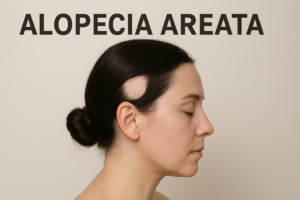
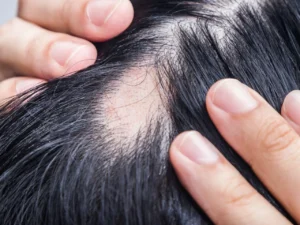
Alopecia areata is an autoimmune condition that can cause sudden, patchy hair loss. It often appears as one or more smooth, round or oval bald patches on the scalp. It can also affect the beard, eyebrows, eyelashes, and other body areas. Some people develop only a few patches, while others experience more extensive hair loss. The condition can sometimes improve without treatment, but recurrence is possible. Alopecia Areata Treatment in Indore depends on the extent of hair loss, disease activity, affected areas, and individual medical needs.
Androgenetic Alopecia
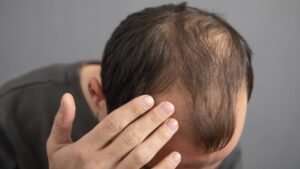
Androgenetic alopecia is commonly known as hereditary or pattern hair loss. It generally develops gradually and may affect both men and women. In men, it can cause a receding hairline or thinning around the crown. In women, it often appears as widening of the parting or reduced hair density across the scalp. Treatment may help slow progression or improve hair density in suitable patients. However, the response varies, and ongoing management may be necessary.
Traction Alopecia
Traction alopecia develops when hair is repeatedly pulled by tight hairstyles. Tight ponytails, braids, extensions, and other styles that create constant tension can contribute to follicle damage. Early traction alopecia may improve when the pulling stops. However, prolonged tension can cause permanent hair loss in affected areas. Reducing repeated pulling and seeking early assessment can help prevent further damage.
Telogen Effluvium
Telogen effluvium causes increased hair shedding when more hairs than usual enter the resting phase of the hair-growth cycle. It may develop after a high fever, major illness, surgery, childbirth, significant stress, or certain nutritional or medical problems. The shedding may become noticeable weeks or months after the trigger. Hair growth can recover when the underlying cause resolves, although recovery varies between individuals.
Scarring Alopecia
Scarring alopecia refers to conditions in which inflammation damages hair follicles and replaces them with scar tissue. Once a follicle is permanently destroyed, hair may not grow back from that area. Possible warning signs include persistent redness, scaling around follicles, pain, burning, or smooth areas where normal follicle openings are no longer visible. Early dermatological assessment is important because prompt treatment may help limit further follicle damage.
Other Types of Hair Loss
Hair loss can also result from fungal scalp infections, certain medical conditions, and other inflammatory disorders. For example, scalp infections may cause scaling, broken hairs, or patches of hair loss and may require specific medical treatment. The appearance of hair loss alone cannot always identify its cause. A proper diagnosis helps avoid treatments that may be ineffective or unsuitable.
Who May Need Alopecia Treatment in Indore?
A dermatology consultation may be helpful if you experience:
- Sudden or patchy hair loss
- Persistent excessive hair shedding
- Gradual hair thinning
- A receding hairline
- Hair loss affecting your beard or eyebrows
- Repeated bald patches
- Scalp irritation accompanied by hair loss
- Hair shedding after illness or major stress
- Hair loss that affects your confidence or daily life
Alopecia Treatment in Indore should be tailored to the condition causing the hair loss. Treating hereditary hair thinning, autoimmune hair loss, and scalp infections may require very different approaches. A dermatologist can help identify the underlying problem and explain the available options.
When Should You See a Dermatologist for Alopecia?
Not all hair loss requires urgent treatment, but certain changes should not be ignored.
Consider consulting a Dermatologist for Alopecia in Indore if you notice:
- Sudden or rapidly progressing hair loss
- New bald patches
- Hair loss with redness, pain, or scaling
- Loss of eyebrows or eyelashes
- Signs of scalp scarring
- Persistent or unexplained shedding
- Hair loss that continues or worsens
- Broken hairs or patches that may indicate infection
Seek prompt medical assessment if hair loss is accompanied by significant scalp inflammation or rapidly developing widespread symptoms. Early evaluation is especially important when a condition may permanently damage hair follicles.
Alopecia Treatment Options in Indore
There is no single treatment suitable for every type of alopecia. The recommended approach depends on the diagnosis, severity, affected area, medical history, and whether the hair follicles remain healthy. The aim of Alopecia Treatment in Indore is to address the underlying cause where possible, reduce ongoing hair loss, and support regrowth when the condition allows it.
Medical Treatment for Alopecia Areata
A dermatologist may recommend medical treatment for alopecia areata depending on the size, number, and activity of the bald patches.
Options may include:
- Prescription topical treatments
- Injections in selected cases
- Systemic treatments for suitable patients
- Regular monitoring of disease activity
- Follow-up to assess regrowth and recurrence
The appropriate treatment depends on factors such as age, affected areas, severity, and medical history. Not every patient needs the same approach. Prescription treatments should be used only under appropriate medical guidance because they can have risks and limitations.
Treatment for Hereditary Hair Loss
Hereditary hair loss often develops gradually and may require long-term management. Treatment begins with assessing the pattern of thinning and checking whether other factors may be contributing to the problem. Depending on the diagnosis, a dermatologist may discuss evidence-based medical options, consistent treatment use, and regular monitoring. Some people experience improved hair density or slower progression, while others may have a more limited response. Complete hair restoration cannot be guaranteed.
Treatment for Excessive Hair Shedding
When hair shedding increases suddenly, the first step is to identify the possible trigger.
A dermatologist may review:
- Recent illnesses or fever
- Major physical or emotional stress
- Medication history
- Dietary patterns
- Possible nutritional deficiencies
- Hormonal or thyroid-related concerns
- Other relevant medical conditions
Treatment depends on the findings. If an underlying condition or deficiency is confirmed, addressing it may help restore normal hair growth. Hair Loss Treatment in Indore should not involve taking supplements or changing medicines without medical advice. Unnecessary supplements may not help and can sometimes cause harm.
Hair Regrowth Treatment in Indore
Hair regrowth depends on the type of alopecia, the condition of the hair follicles, and the underlying cause. A treatment plan may focus on controlling inflammation, addressing an underlying illness, managing hereditary hair loss, or reducing ongoing follicle damage. During Hair Regrowth Treatment in Indore, follow-up visits may help the dermatologist assess changes in hair density, shedding, and scalp health. Hair grows gradually, so meaningful changes can take time to assess. Some conditions respond better than others, and regrowth is not guaranteed.
Can Alopecia Be Treated Without Surgery?
Yes. Many forms of alopecia can be managed without surgery. Depending on the diagnosis, treatment may involve prescribed medicines, management of underlying health problems, or changes that reduce ongoing damage to hair follicles. Hair transplantation may be considered for selected people with stable, appropriate forms of hair loss. However, it is not suitable for every type of alopecia, particularly active inflammatory or scarring conditions. A dermatologist can help determine whether nonsurgical treatment or further specialist assessment is appropriate.
How Is Alopecia Diagnosed?
Alopecia diagnosis begins with understanding the pattern and history of hair loss.
An Alopecia Specialist in Indore may use several steps to evaluate the condition:
- Medical and family history: Reviewing when hair loss began and whether relatives have experienced similar problems.
- Examination of affected areas: Checking the scalp, beard, eyebrows, and other affected areas.
- Assessment of the hair-loss pattern: Looking for patches, thinning, broken hairs, or signs of scarring.
- Medication and illness review: Discussing recent illnesses, stressful events, medicines, and supplements.
- Specialized scalp examination: Using tools such as a dermatoscope when appropriate.
- Blood tests: Checking for suspected nutritional, thyroid, or other medical concerns when indicated.
- Scalp biopsy or other investigations: Considering these when the diagnosis remains uncertain or a specific condition requires further assessment.
Not everyone needs blood tests or a biopsy. Investigations are selected according to the clinical findings.
How Long Does Alopecia Treatment Take?
The time needed to assess and treat alopecia varies from person to person. Hair grows in cycles, so changes may not become visible immediately. The timeline also depends on the underlying condition and the treatment being used.
Several factors can influence progress:
- Type of alopecia
- Duration and severity of hair loss
- Whether the underlying trigger has resolved
- Condition of the hair follicles
- Response to treatment
- Consistency with the recommended plan
Some forms of hair shedding improve after the underlying trigger is addressed. Other conditions may require ongoing treatment or may experience repeated episodes. Regular follow-up helps determine whether the treatment is working and whether adjustments are needed.
Can Alopecia Cause Permanent Hair Loss?
Some forms of alopecia are temporary or may improve with appropriate treatment. Others can cause permanent hair loss. Scarring alopecia is particularly important because inflammation may permanently destroy hair follicles. Long-standing traction alopecia can also lead to permanent damage. Early assessment can help identify potentially progressive conditions and reduce delays in treatment. If you notice scalp scarring, persistent inflammation, or rapidly expanding areas of hair loss, arrange a dermatology consultation.
What Should You Do Before Alopecia Treatment?
A little preparation can make your consultation more useful.
Before visiting the dermatologist:
- Record when the hair loss started.
- Note whether it is sudden, gradual, or patchy.
- Mention recent illnesses or stressful events.
- Share any family history of hair loss.
- Bring details of medicines and supplements.
- Explain previous hair treatments you have tried.
- Mention scalp itching, pain, scaling, or other symptoms.
- Avoid starting unproven hair-growth treatments without medical advice.
Photographs showing how the affected area has changed over time may also help explain your concerns.
What Should You Do After Alopecia Treatment?
Following the treatment plan and attending recommended reviews can help your dermatologist monitor progress.
General care may include:
- Using prescribed treatments as directed
- Attending follow-up appointments
- Avoiding hairstyles that pull tightly on the hair
- Using gentle hair-care products
- Limiting unnecessary heat and chemical damage
- Eating a balanced diet
- Seeking advice before taking supplements
- Reporting side effects or worsening symptoms
Do not stop or change a prescribed treatment without discussing it with your healthcare professional.
Alopecia Treatment in Vijay Nagar, Indore
People living or working in Vijay Nagar may prefer a conveniently located dermatologist for evaluation and follow-up. Alopecia Treatment in Vijay Nagar begins with understanding the type of hair loss, its possible causes, and whether the condition is affecting the scalp or other areas. If you are searching for an Alopecia Doctor Near Vijay Nagar, Dr. Vaishali Singh provides dermatology consultation for hair and scalp concerns from Scheme No. 78, Vijay Nagar, Indore. Patients looking for an Alopecia Treatment Clinic in Vijay Nagar should consider the importance of accurate diagnosis, individualized treatment, and monitoring rather than relying only on cosmetic products.
Alopecia Treatment Near Scheme No. 78
For people living or working around Scheme No. 78, a nearby dermatology consultation may make follow-up visits more convenient. If you are looking for an Alopecia Doctor Near Scheme No. 78, consultation can help you understand whether your hair loss may be related to alopecia areata, hereditary thinning, excessive shedding, inflammation, or another condition. Alopecia Treatment Near Scheme No. 78 should be selected according to the diagnosis and individual medical needs. Sudden, persistent, or unexplained hair loss deserves appropriate assessment.
Alopecia Treatment in Dewas Naka
People searching for Alopecia Treatment in Dewas Naka may be experiencing patchy hair loss, gradual thinning, increased shedding, or scalp symptoms. The right treatment depends on the cause. Autoimmune conditions, hereditary hair loss, nutritional concerns, infections, and inflammatory scalp disorders may require different management approaches. If hair loss is recurring, spreading, or accompanied by scalp discomfort, a dermatologist can assess the affected areas and discuss suitable treatment options.
What Is the Alopecia Treatment Cost in Indore?
The Alopecia Treatment Cost in Indore varies according to the type of hair loss and the treatment required.
Factors that may affect the overall cost include:
- Type and severity of alopecia
- Duration of hair loss
- Consultation requirements
- Diagnostic tests, if needed
- Medicines or procedures recommended
- Number of treatment sessions, where applicable
- Follow-up appointments
- Long-term maintenance requirements
Some patients may need only a limited assessment and treatment plan, while others may require ongoing monitoring or more complex management. A consultation is the most appropriate way to understand the recommended treatment, necessary investigations, and associated costs. The exact plan depends on your individual condition.
Why Choose Professional Alopecia Treatment?
Hair loss can have several different causes, and treatments designed for one condition may not work for another.
Professional evaluation helps with:
- Accurate assessment: Understanding the pattern and progression of hair loss.
- Identifying the cause: Evaluating possible autoimmune, hereditary, inflammatory, nutritional, or medical factors.
- Appropriate treatment selection: Choosing options suited to the diagnosis and individual needs.
- Monitoring progress: Assessing changes in shedding and hair growth.
- Recognizing scarring conditions: Identifying signs of potentially permanent follicle damage.
- Realistic expectations: Understanding what treatment may achieve and its limitations.
- Ongoing care: Adjusting treatment when required.
When comparing options for the Best Alopecia Treatment in Indore, consider whether the care includes a proper diagnosis, medically appropriate recommendations, and follow-up when needed.
How Can You Support Healthy Hair Growth?
Healthy hair-care habits can support overall hair health, although they cannot treat every type of alopecia.
Helpful practices include:
- Eating a balanced diet with adequate protein
- Addressing confirmed nutritional deficiencies with medical guidance
- Avoiding tight hairstyles that pull on the hair
- Limiting unnecessary heat and chemical treatments
- Handling wet hair gently
- Avoiding unverified hair-growth supplements
- Managing stress where possible
- Seeking medical advice for persistent hair loss
There is no single shampoo, oil, or supplement that can treat every cause of hair loss. If shedding continues despite changes in hair care, professional evaluation is a better next step than repeatedly switching products.