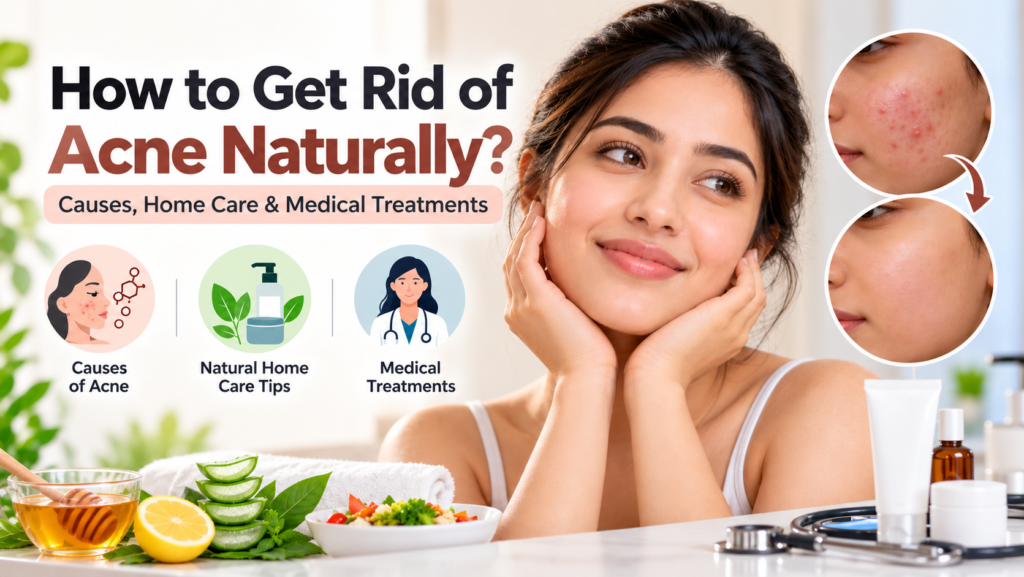
Can acne really go away naturally?
Sometimes, mild acne can improve with a simple and consistent skincare routine, healthy habits, and time. But acne is not always something you can solve with home remedies alone. If pimples are painful, keep coming back, leave dark marks, or start forming scars, professional treatment may be needed. The first thing to remember is that acne is not caused simply by dirty skin. Hormones, excess oil, blocked pores, inflammation, genetics, skincare products, and other factors can all play a role.
If you are looking for Acne Treatment in Indore, it is important to understand what is causing your breakouts before choosing a treatment. Squeezing pimples or trying harsh DIY remedies can irritate the skin and increase the risk of marks and scars. The good news is that acne can often be managed successfully with the right approach. The goal is not only to treat the pimples you can see today but also to reduce new breakouts and protect your skin from long-term marks and scarring.
Can You Really Get Rid of Acne Naturally?
When people say they want to treat acne naturally, they usually mean they want to avoid unnecessary medicines and use healthy skincare and lifestyle habits instead. For mild acne, these habits can be helpful. Gentle cleansing, avoiding irritating products, getting enough sleep, managing stress, eating a balanced diet, and protecting your skin from the sun can all support healthier skin. However, natural care does not mean that acne will always disappear without medical treatment. Acne develops when oil, dead skin cells, and other material block hair follicles. Inflammation can then develop, leading to blackheads, whiteheads, pimples, or deeper acne lesions. Hormonal changes can increase oil production, while genetics can influence how easily a person develops acne. This is why two people can follow a similar skincare routine but have very different acne problems.
So, think of natural care as supportive skin care, not a guaranteed cure.
Why Do Pimples Keep Coming Back?
Have you ever treated one pimple only to notice another one appearing a few days later? That happens because acne is not just about one visible pimple. The underlying acne process may still be active.
Several things can contribute:
- Excess oil production
- Dead skin cells building up
- Blocked pores
- Inflammation
- Acne-associated bacteria
- Hormonal changes
When a pore becomes blocked, it can develop into a blackhead or whitehead. If inflammation develops, it may become a red or swollen pimple. This is why simply drying out or squeezing one pimple may not prevent the next breakout. Effective Pimples Treatment in Indore focuses on managing the factors contributing to acne, not just treating individual spots.
What Causes Acne?
Acne can have several causes, and the reason may be different from one person to another.
Can Hormonal Changes Cause Acne?
Yes. Hormonal changes can influence oil production and contribute to acne. Teenagers often experience acne during puberty because hormone levels change during this period. Some adults may also experience hormonal breakouts, particularly around the chin, jawline, or lower face. For some women, acne may become more noticeable around the menstrual cycle. Hormonal conditions can also contribute to persistent acne in certain patients. If acne appears suddenly or continues despite a good skincare routine, discussing the pattern with a dermatologist can be useful.
Can Stress Make Acne Worse?
Stress is not the only cause of acne, but it may contribute to flare-ups in some people. When you are stressed, changes in your body’s hormonal and inflammatory responses may affect your skin. Stress can also indirectly affect acne if it leads to poor sleep, irregular eating, or touching and picking the face more often. You do not need to blame yourself whenever you have a breakout. Acne is a complex condition, and stress is only one possible factor.
Can Food Cause Acne?
There is no single food that causes acne in everyone. A balanced diet containing vegetables, fruits, whole grains, adequate protein, and other nutritious foods is generally a sensible approach for overall health. Some people may notice that certain foods seem to be associated with their breakouts. Instead of following extreme food restrictions, it is better to observe your own skin and discuss persistent concerns with a healthcare professional. Food can be one part of acne management, but it should not be treated as the only answer.
Does Poor Hygiene Cause Pimples?
No. Acne is not simply a result of having a dirty face. Washing your face too often or scrubbing aggressively can actually irritate acne-prone skin. This may make redness and discomfort worse. A gentle cleanser and a consistent routine are usually more useful than repeatedly washing your face throughout the day.
Can Skincare and Hair Products Cause Acne?
Certain oily or pore-clogging skincare and hair products may contribute to breakouts in some people. For acne-prone skin, look for products labelled non-comedogenic, which generally means they are formulated to be less likely to clog pores. If you notice small bumps around your forehead, hairline, cheeks, or other areas after changing a product, consider whether the new product could be contributing to the problem.
What Can You Do at Home to Reduce Acne Naturally?
You do not need a complicated 10-step routine to take better care of acne-prone skin. In fact, keeping your routine simple can sometimes be more helpful.
Clean Your Face Gently
Wash your face gently, especially after sweating. Avoid rough scrubbing, harsh brushes, or repeatedly washing the skin to “remove all the oil.” Your skin needs some natural oil to maintain its protective barrier. Choose a gentle cleanser that suits your skin and avoid products that leave your face extremely dry or uncomfortable.
Stop Picking and Popping Pimples
This is one of the hardest habits to stop, but it matters. When you squeeze a pimple, you can push inflammation deeper into the skin or injure the surrounding tissue. This may increase the risk of dark marks and acne scars. If a pimple is painful or deep, it is better to get professional advice than repeatedly squeezing it.
Keep Your Skincare Routine Simple
Using many acne products at the same time may seem like a faster solution, but it can irritate the skin. Introduce products carefully and give your skin time to adjust. If you experience significant burning, redness, peeling, or discomfort, speak with a dermatologist.
Choose Non-Comedogenic Products
Non-comedogenic products are designed to be less likely to block pores. This can be useful when choosing moisturisers, sunscreens, makeup, and other skincare products for acne-prone skin. Remember that “non-comedogenic” does not guarantee that a product will work perfectly for every person. Your skin can still react differently to individual ingredients.
Use Sunscreen
Sunscreen is important when you have acne and acne marks. Sun exposure can make pigmentation more noticeable, particularly after pimples heal. A suitable sunscreen can help protect your skin while you work on managing acne. Choose a sunscreen that feels comfortable on your skin and is suitable for acne-prone skin.
Keep Frequently Touched Items Clean
Your mobile phone, pillowcase, makeup tools, and other frequently touched items come into regular contact with your face. Keeping these items reasonably clean is a sensible hygiene habit. However, remember that acne is not simply caused by dirt, so cleaning your pillowcase alone will not cure acne.
Which Natural Acne Remedies Are Safe to Try?
“Natural” does not automatically mean “safe.”
Instead of applying ingredients from your kitchen directly to your face, focus on habits that support healthy skin.
These include:
- Following a simple skincare routine
- Eating a balanced diet
- Getting adequate sleep
- Managing stress
- Avoiding unnecessary skin irritation
- Choosing properly formulated products for acne-prone skin
- Protecting your skin from excessive sun exposure
Healthy lifestyle habits can support acne management, but they should not be presented as guaranteed acne cures. If your acne is persistent or severe, professional evaluation may be more useful than trying one home remedy after another.
Which Home Remedies for Pimples Should You Avoid?
Many popular DIY acne remedies can do more harm than good.
Lemon Juice
Lemon juice can irritate the skin and may increase sensitivity. Applying it directly to acne is not a recommended treatment.
Toothpaste
Toothpaste is made for teeth, not facial skin. Ingredients in toothpaste can cause irritation, dryness, or burning.
Baking Soda
Baking soda can disrupt the skin’s normal environment and cause irritation, particularly when used repeatedly.
Undiluted Essential Oils
Essential oils can cause irritation or allergic reactions when applied directly to the skin. “Natural” does not mean risk-free.
Harsh Scrubs
Scrubbing acne aggressively can increase irritation and inflammation. Acne-prone skin usually benefits more from gentle care.
Strong DIY Chemical Mixtures
Mixing household or cosmetic ingredients without knowing how they interact can damage the skin.
Excessive Steaming
Steam may feel relaxing, but excessive heat can irritate sensitive or inflamed skin.
If something burns or badly irritates your skin, that does not mean it is working.
A treatment should not be judged by how painful it feels.
Can Changing Your Diet Help With Acne?
Diet may play a role in acne for some people, but it is only one part of the picture. Instead of focusing on one “magic” food, aim for an overall balanced diet.
Include:
- Fresh fruits and vegetables
- Whole grains
- Adequate protein
- Healthy sources of fats
- Sufficient fluids
Reducing highly processed foods may be useful as part of an overall healthy lifestyle. If you notice a consistent relationship between a particular food and your acne, keep track of the pattern rather than immediately eliminating large groups of foods from your diet. There is no need to follow an extreme diet simply because you have pimples.
How Can You Prevent New Pimples?
You may not be able to prevent every breakout, but consistent habits can help reduce unnecessary irritation and support acne management.
Try to:
- Wash your face gently
- Avoid touching your face unnecessarily
- Do not squeeze or pop pimples
- Use suitable skincare products
- Remove makeup properly
- Cleanse after heavy sweating
- Apply sunscreen
- Keep hair products away from acne-prone areas
- Follow a consistent skincare routine
Most importantly, be patient. Acne often takes time to improve, and changing products every few days can make it harder to understand what is helping your skin.
When Should You See a Dermatologist for Acne?
Sometimes home care is simply not enough.
You should consider seeing a Dermatologist for Acne in Indore if:
- Acne continues for weeks or months
- Pimples are painful or deep
- Breakouts happen frequently
- Acne leaves dark marks
- Scars are beginning to develop
- Acne is affecting your confidence or daily life
- Basic skincare is not helping
- Acne suddenly becomes severe
- Adult acne continues for a long time
A dermatologist can assess your acne and determine its type and severity. This is important because blackheads, whiteheads, inflammatory acne, nodules, acne marks, and acne scars may require different approaches. Early professional advice can also help reduce the chance of ongoing inflammation and scarring.
What Medical Treatments Are Available for Acne?
There is no single acne treatment that is right for everyone. Treatment depends on factors such as acne type, severity, skin type, age, medical history, and previous treatment.
Topical Acne Treatments
Dermatologists may recommend topical treatments that are applied directly to the skin. Depending on the individual case, these may help unclog pores, reduce inflammation, control oil production, or prevent new breakouts. The exact product should be selected according to the patient’s skin and acne pattern rather than copied from someone else’s routine.
Oral Acne Medicines
Some patients may need oral medicines when acne is persistent, widespread, inflammatory, or difficult to control with topical treatment. These medicines should be used under medical supervision. A dermatologist can decide whether oral treatment is appropriate after considering the patient’s health, acne severity, and other factors.
Chemical Peels for Acne
Selected chemical peels may be considered for certain acne concerns and post-acne pigmentation. The type and strength of a peel should be selected professionally because acne-prone skin can become irritated if an unsuitable treatment is used. Chemical peels are not a universal solution and may not be appropriate for everyone.
Acne Scar Treatment
Active acne and acne scars are two different concerns. The first priority is often to control ongoing breakouts. Once active acne is better controlled, a dermatologist can assess the type of scarring and discuss suitable options. The right approach depends on whether the scars are depressed, raised, pigmented, or associated with other skin changes.
What Is the Best Acne Treatment in Indore?
People often search for the Best Acne Treatment in Indore, but there is no single treatment that can honestly be called the best for every patient.
The right treatment depends on:
- Type of acne
- Severity of acne
- Skin type
- Age
- Hormonal factors
- Previous treatments
- Presence of acne marks or scars
- Individual response to treatment
For one person, a simple topical routine may be enough. Another person may require a combination of treatments and regular follow-up. That is why a proper skin assessment is more useful than choosing a treatment only because it worked for someone else.
Is Acne Treatment in Vijay Nagar, Indore Suitable for Adults?
Absolutely. Acne is not limited to teenagers.
Adults can experience persistent or new acne for several reasons, including hormonal changes, stress, skincare products, medications, and other individual factors. Adult acne may appear around the chin and jawline, although it can occur on other areas of the face and body too. People looking for Acne Treatment for Adults in Indore may benefit from a proper assessment rather than assuming that teenage acne products will automatically work for adult skin. For patients seeking Acne Treatment in Vijay Nagar, Indore, the treatment plan should be based on the actual condition of the skin and the factors that may be contributing to recurring breakouts.
Looking for an Acne Doctor Near Vijay Nagar?
If basic skincare is not controlling your acne, consulting an Acne Doctor Near Vijay Nagar can help you understand why the breakouts keep returning. A professional assessment can look at the type of acne, severity, skin sensitivity, previous products, and possible triggers. This is especially useful when pimples are painful, leave marks, or continue despite several weeks of consistent skincare. Rather than trying a new product every few days, getting an appropriate diagnosis can help you follow a more focused treatment plan.
Looking for a Dermatologist Near Scheme No. 78?
If you are searching for a Dermatologist Near Scheme No. 78, consider seeking professional advice when acne is persistent, painful, recurring, or beginning to leave scars. A dermatologist can examine your skin and help distinguish between active acne, post-acne pigmentation, and acne scarring. These concerns may require different management. Professional guidance can also help you avoid unnecessary products that may irritate your skin or make breakouts more difficult to control.
Acne Treatment for Patients Near Dewas Naka
Patients looking for a Dermatologist in Dewas Naka may consider professional consultation when recurring pimples, acne marks, or scarring are becoming difficult to manage. Instead of focusing only on the visible breakout, a dermatologist can assess the overall acne pattern and discuss suitable treatment options based on the individual’s skin. This can be particularly helpful for people who have already tried multiple home remedies or over-the-counter products without seeing consistent improvement.
Why Choose Dr. Vaishali Singh for Acne Treatment in Indore?
Acne treatment should begin with understanding the patient’s skin rather than simply selecting a popular product. Dr. Vaishali Singh focuses on evaluating the acne pattern, skin condition, possible triggers, and the patient’s individual concerns before considering an appropriate treatment approach.
For Acne Treatment in Indore, professional evaluation can help with:
- Understanding the type and severity of acne
- Identifying possible triggers
- Choosing an appropriate treatment approach
- Managing active breakouts
- Reducing the risk of acne scars
- Addressing acne marks
- Monitoring treatment response
- Adjusting treatment when needed
Every patient’s skin is different. A treatment plan should therefore be personalised rather than based on a one-size-fits-all routine.
Frequently Asked Questions
The right Acne Treatment in Indore depends on the type and severity of acne, your skin type, age, medical history, and possible triggers. Mild acne may respond to suitable skincare, while persistent or inflammatory acne may require medical treatment. A dermatologist can examine your skin and recommend an approach based on your individual condition rather than asking you to follow the same treatment used by someone else.
A Dermatologist for Acne in Indore can be helpful when acne continues for several weeks or months, becomes painful, keeps returning, or begins leaving dark marks or scars. You may also benefit from consultation if basic skincare is not helping or acne is affecting your confidence. Professional assessment can identify the severity and type of acne and help you understand which treatment options may be appropriate.
People looking for Acne Treatment in Vijay Nagar, Indore can consult a qualified dermatologist for an individual skin assessment. The appropriate treatment depends on whether you have mild pimples, inflammatory acne, recurring adult acne, pigmentation, or scarring. Instead of selecting treatment based only on online recommendations, a professional can evaluate your skin and help create a treatment plan suited to your condition.
The Best Acne Treatment in Indore is not the same for every person. Acne severity, skin type, age, hormonal factors, previous treatments, and the presence of marks or scars can all influence treatment decisions. Some patients may need only a suitable topical routine, while others may require additional medical treatment. A dermatologist can assess these factors before recommending an appropriate approach.
When choosing an Acne Doctor Near Vijay Nagar, look for a qualified dermatology professional who focuses on proper diagnosis rather than promising instant results. It is useful to discuss how long you have had acne, what products or treatments you have already tried, and whether you have marks or scars. A good consultation should include realistic expectations and a treatment plan suited to your individual skin.
A Dermatologist Near Scheme No. 78 can help when acne is persistent, painful, recurring, or leaving dark marks and scars. Professional assessment is particularly useful if your current skincare routine is not improving the condition. A dermatologist can determine whether you are dealing with active acne, post-acne pigmentation, or scarring and can discuss treatment options according to your skin type and individual needs.
Yes, a Dermatologist in Dewas Naka can assess recurring acne and look for factors that may be contributing to repeated breakouts. These can include hormonal changes, skincare or hair products, medications, stress, and the severity of inflammation. A professional evaluation can help determine whether you need simple skincare advice or a more structured medical treatment plan for better long-term acne management.
Pimples Treatment in Indore can include skincare guidance, dermatologist-recommended topical treatments, oral medicines when appropriate, selected procedures such as chemical peels, and treatment for acne marks or scars. The suitable option depends on the type and severity of your acne. It is better to choose treatment after assessing your skin rather than using multiple products at the same time or repeatedly changing your routine.