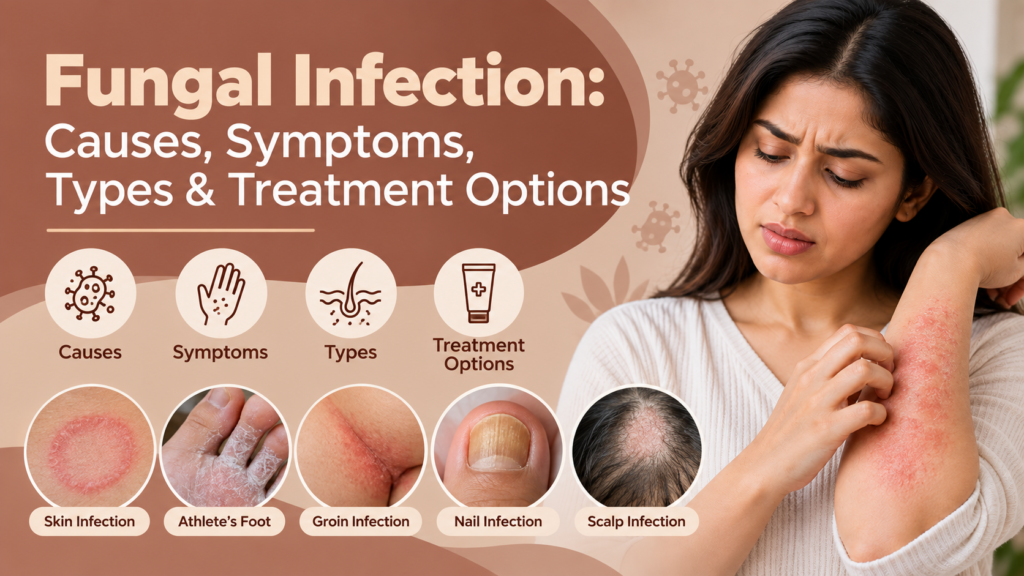
Fungal Infection: Causes, Symptoms, Types & Treatment Options
Why does a fungal infection keep coming back even after using a cream? If you have ever dealt with repeated itching, redness, scaling, or irritation, you may have wondered whether it is a fungal infection. These infections can be uncomfortable and frustrating, especially when the symptoms improve for a while and then return. Fungal infections can affect different parts of the body, including the skin, feet, groin, skin folds, nails, and scalp. Warm weather, sweating, humidity, and moisture can create conditions in which certain fungi grow more easily. However, not every itchy or red patch is a fungal infection. Eczema, allergies, psoriasis, bacterial infections, and other skin conditions can sometimes look similar. This is why proper diagnosis matters. Fungal Infection Treatment in Indore depends on the type of infection, where it occurs, how severe it is, and whether it has happened before. Let us understand the common causes, symptoms, types, treatment options, and ways to prevent fungal infections from coming back. What Is a Fungal Infection? A fungal infection is an infection caused by fungi. Fungi are organisms that can live in the environment and, in some cases, on the human body. Certain fungi can multiply excessively when conditions are suitable. Warmth, moisture, sweating, and poor ventilation can create an environment that allows some types of fungi to grow. Common areas affected by fungal infections include: Feet Groin Inner thighs Underarms Skin folds Nails Scalp Other areas of the skin Having a fungal infection does not mean that a person has poor hygiene. These infections can happen to anyone, particularly when there is frequent sweating or exposure to warm and damp environments. Different fungal infections can also behave differently. A superficial skin infection may be managed differently from a fungal nail or scalp infection. Why Do Fungal Infections Happen? Fungal infections can develop when certain fungi find suitable conditions to grow. Several factors may increase the likelihood of infection. Excessive Sweating Frequent sweating can leave the skin damp for longer periods. This is especially important in areas such as the feet, groin, underarms, and skin folds. Humid Weather Warm and humid weather can encourage fungal growth. People living in or travelling to humid environments may notice more problems with fungal infections during certain seasons. Staying in Damp Clothes Wearing sweaty clothes for a long time can keep the skin warm and moist. Changing into clean, dry clothes after exercise or heavy sweating can help reduce prolonged moisture. Tight or Non-Breathable Clothing Tight clothing may trap heat and moisture against the skin. Breathable fabrics can be more comfortable, especially during hot weather. Walking Barefoot in Shared Wet Areas Swimming pools, changing rooms, showers, and other shared wet areas can expose people to certain fungi. Wearing suitable footwear in shared wet areas can reduce direct contact with potentially contaminated surfaces. Sharing Personal Items Some fungal infections can spread through shared towels, clothing, footwear, bedding, or other personal items. Poor Ventilation Areas that remain warm, damp, and poorly ventilated can encourage fungal growth. Certain Medical Conditions Some health conditions may increase the risk of fungal infections. A weakened immune system can also make certain infections more likely or harder to manage. If fungal infections keep returning, it may be useful to discuss possible contributing factors with a healthcare professional. Can Humidity and Sweating Cause Fungal Infections? Humidity and sweating do not automatically cause a fungal infection, but they can create conditions that allow some fungi to grow more easily. For example, you may be more likely to experience fungal skin problems when you: Sweat heavily during exercise Spend a lot of time outdoors Wear sweaty gym clothes for several hours Stay in wet clothes Experience humid or monsoon weather Do not dry skin folds properly Wear shoes that keep your feet damp Keeping the skin dry can therefore be an important part of prevention. If you regularly experience fungal infections despite taking these precautions, professional evaluation may help identify the reason. What Are the Symptoms of a Fungal Infection? The symptoms depend on the type of fungal infection and the area affected. Common signs can include: Itching Redness Scaling Peeling or dry skin Burning Cracks in the skin Ring-shaped patches Moist or irritated skin folds Changes in nail colour or thickness Brittle nails Scaling of the scalp Hair loss in some scalp infections Some fungal infections have a clearly defined border, while others may appear as diffuse redness or scaling. Because several skin conditions can produce similar symptoms, it is not always possible to confirm a fungal infection simply by looking at it. What Are the Different Types of Fungal Infections? Fungal infections can affect different parts of the body. Some common types include the following. What Is Ringworm? Despite its name, ringworm is not caused by a worm. It is a fungal infection of the skin. It can produce itchy, scaly patches that may have a ring-like appearance. Ringworm can affect different parts of the body, including the arms, legs, trunk, or other skin areas. It can spread through direct contact or through contaminated personal items in some cases. Treatment depends on the location and severity of the infection. What Is Athlete’s Foot? Athlete’s foot is a fungal infection that affects the feet, particularly the areas between the toes. Common symptoms may include: Itching Scaling Peeling skin Cracks Burning or discomfort Moist or whitish skin between the toes Keeping the feet dry is important. Change sweaty socks regularly and dry carefully between the toes after bathing. Shared wet areas such as gym showers and changing rooms can also be potential sources of exposure. Can Fungal Infections Affect the Groin? Yes. Fungal infections can affect the groin and inner thigh area. Warmth, sweating, moisture, and tight clothing can contribute to fungal growth in this region. The affected skin may become itchy, red, scaly, or irritated. Because several conditions can cause rashes in the groin area, persistent symptoms should be evaluated rather than repeatedly using different creams. Can Fungal Infections Affect Skin Folds? Yes. Skin folds can remain warm and moist, which may make them more vulnerable to certain […]